Sunday, September 16, 2012

World's 10 largest nuclear power plants

The Kudankulam nuclear power plant in Tamil Nadu will be one of the largest N-power plants in India. So which are the world's ten largest nuclear power plants? Find out: 


Cattenom nuclear power station is located in Lorraine in the Cattenom commune in France. The plant consists of 4 pressurized water reactors with an electric output of 1300 megawatt from each reactor. The plant became operational in 1986 and is run by Électricité de France and employs over 1200 employees.


Located in Nord, France the Gravelines nuclear power station and uses six nuclear plants. The plant became the first of its kind to generate over one thousand terawatt hours of electricity. The cooling water from the plant that carries waste heat is used by local fish farmers to help raise seabass, gilt-head breams and other fish.


The Yonggwang nuclear power plant has six nuclear reactors and is operated by Korea Hydro & Nuclear Power Company. The plant became operational in 1978. Situated in Jeollanam-do province of South Korea, the power plant produces over 5400 megawatts of power.


The Fukushima Nuclear Power Plant is located in 170 miles north of Tokyo, Japan. The plant became operational in 1971 but was badly damaged in the catastrophic earthquake and tsunami that hit Japan in 2011. Managed by the Tokyo Electric Power Company, the plant was the world's tenth largest nuclear power plant.


The Bruce nuclear generating station is situated in Ontario, Canada. The plant has eight nuclear plants out of which only six are operational. The Bruce station is the largest nuclear facility in North America and employs over 3800 employees. The current output with 6 of the 8 reactors is 4,640 megawatt.


Kashiwazaki-Kariwa is the largest nuclear power generating station in the world. Situated in towns of Kashiwazaki and Kariwa in Niigata Prefecture, Japan, the plant covers 4.2-square-kilometer and is operated by The Tokyo Electric Power Company. The plant was built in 1985 but all seven reactors were operational in 1997. The plant was shut down for 21 months after radioactive leaks were discovered following an earthquake in 2007.


Situated in the French town Paluel in Normandy, the nuclear power station consists of four reactors that generates over 1330 megawatts of power per hour and employs over 1200 workers. The plant generates 32 billion kilowatt-hours of energy every year. The plant became operational in 1984 and is run by Électricité de France.


Situated in Enerhodar, Ukraine, the Zaporizhzhia nuclear power station is the largest in Europe and produces over half of the country's nuclear energy. The plant has six VVER pressurized light water nuclear reactors, each generating 1000 MWe. The plant became operational in 1985 and is operated by Energoatom.


The Oi nuclear power plant is located in Fukui Prefecture, Japan and is operated by Kansai Electric Power Company. The plant is spread across 1.88 square kilometers and has four nuclear reactors which generate over 1000 megawatt of power per hour.


Situated in the Gyeongsangbuk-do province of South Korea, the Uljin nuclear power plant has been built to withstand 6.5 magnitude earthquakes. The plant is fortified by walls to protect it from a 10-meter-high tsunami. There is one 942 MW unit, one 945 MW unit, one 994 MW unit, one 998 MW unit, and two 1,001 MW units. Unit-1 was commissioned in 1988, Unit-2 in 1989, Unit-3 and Unit-4 in 1998, Unit-5 in 2003, and Unit-6 in 2005.

░ ░ ░ ░ ░ ░ ░ ░ ░ ░ ░ ░ ░ ░ ░ ░ ░ ░ ░ ░ ░ ░ ░ ░ ░ ░ ░


Sunday, October 9, 2011

Famous school/college dropouts

Did you know that Apple co-founder Steve Jobs was a college dropout? Some people are too smart to be confined to the classroom walls! Here's a look at other famous school/college dropouts.


Master blaster Sachin Tendulkar never attended a college.


Steve Jobs got himself enrolled in Reed College in Oregon, but one semester later, he dropped out.


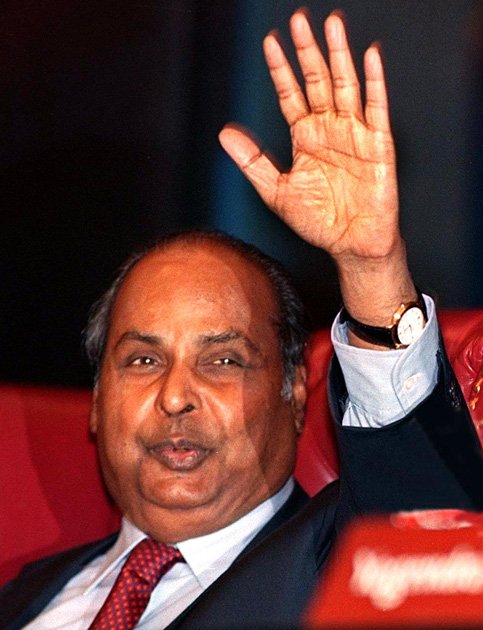
Reliance founder Dhirubhai Ambani was only 16 when he left for Aden to work as a clerk owing to financial issues in family.


After scoring a near-perfect 1590 on his SATs, Gates enrolled at Harvard but left without a degree to start Microsoft Corp.


Larry Ellison, Oracle co-founder, attended the University of Illinois but left at the end of his second year, as he skipped the exams following the death of his adoptive mother. He then went to the University of Chicago, but didn't stay beyond a term.


WikiLeaks founder Julian Assange attended the University of Melbourne, majoring in physics and mathematics. He received only a minimum grade for math and left the university soon to start his own venture.


After the wonder effect of Facebook, Zuckerberg packed his dreams and left Harvard to relocate to Silicon Valley.


American aviator Charles Lindbergh, the first person to fly solo across the Atlantic Ocean, quit the University of Wisconsin and took flying classes instead.


Genius director Quentin Tarantino is a high school dropout who went to work in a video store for his love for movies.


Steven Spielberg was not known for his academic excellence. Interestingly, he even failed to get admission into a film-making institute!


Sir Richard Branson had a difficult time in school because of his dyslexia. He left school when he was only 16.


Doris Lessing, won the Nobel Prize for Literature in 2007, had to end her formal schooling when she was 14. She had worked as a nanny, telephone operator, stenographer, and a journalist before becoming a novelist at the age of 31.


Fashion designer Ralph Lauren, the founder of Polo, left the City College of New York business school to design ties for Beau Brummel. He launched Polo later that same year.


Former American Idol judge Simon Cowell dropped out of school at age 16 and landed a job in the mailroom at EMI. At 23 he left to start his own record label, Fanfare.


ΘΘΘΘΘΘΘΘΘΘΘΘΘΘΘΘΘΘΘΘΘΘΘΘΘΘΘΘΘΘΘΘΘΘΘΘΘΘΘΘΘΘΘΘΘΘΘΘΘΘΘΘΘΘΘ

 Source : Yahoo

Thursday, August 18, 2011

Jan Lokpal movement: Who is right Anna or Government ?

 " A battle we must not lose " - Pritish Nandy

Forget Anna Hazare. The Jan Lokpal movement can go to hell for all I care. Let us just look at the issues over which the battle between the Government and us citizens is being fought. And then let’s decide where we want to stand, each one of us, on the issue of corruption.

The first question is: Do corruption and bribery hurt you? If they do, do you want a solution? If your answer is yes to both, do you think such a solution lies with an independent authority? Or do you think a corrupt Government can fight corruption on its own, and within its own ranks? If your answer is no to that, then we need to create an independent institution to fight corruption. Right? Well, that’s precisely what Anna is asking for. He is asking for a Lokpal that the Government cannot influence nor manipulate. This is the first battle.


The second battle is over four things. One: Should the Prime Minister come under the purview of the Lokpal? Almost everyone I know thinks he should. A honest Prime Minister wouldn’t care. A dishonest one must be supervised. Or else, we will have cases like Bofors that will never ever be resolved. Two: Should Members of Parliament come under the Lokpal? I have not met a single person till date who thinks that our MPs are so honest that they need not be supervised. My guess is if a referendum is ever taken, Anna will get a 100% yes to this question, given what people think of our politicians and the standards of probity in public life. The third question is even more obvious: Do all public servants need to come under the Lokpal? My guess is India’s answer will be yes, yes, yes. Every day, in every area of our life and work, we are constantly harassed, intimidated and extorted by corrupt Government officers. The poorer you are, the worse is the torture. So yes, every public servant, every Government officer must come under the Lokpal. Question four: Who should give permission to file an FIR against a corrupt judge? If the Lokpal can look into corruption charges against the PM, the MPs and Government servants, isn’t it only logical to expect it to do the same against judges?


The third and final battle is over an even simpler thing: The Citizen’s Charter. Should every Government office have such a Charter which will clearly state which officer will do what work and in how much time? And should an officer who refuses to do his work in time or asks for a bribe to move a file be punished? The Government says a charter a fine but Government servants must not be penalised if they don’t do their work! Anna believes that officers not doing their work in time amounts to corruption and must face the same treatment. Isn’t it rather obvious what India thinks about this?
 
Do we really need a referendum on these simple, basic issues? I seriously doubt it. Every Indian will endorse the idea of a Lokpal as Anna and his team have envisioned it, with the help of thousands of Indians who have contributed online to the process of drafting the bill.


Yes, there are genuine fears that we should not create yet another monster out there, who will make life more difficult for us than it already is. But even that has been addressed rather adroitly by Anna’s team. It is a complex process, true but it also ensures that the choice is wisely made. And what if there are charges against the Lokpal? Well, there’s a provision there too. You can go straight to the Supreme Court and seek justice out there.

 
So why are we arguing so much over this Bill? Why is the Government digging its heels in and refusing to listen to us citizens? Why must Anna go on a hunger strike all over again to press home the point that corruption must be fought back? I guess it’s a question of both ego and fear. No one likes to give up the power they have, and certainly not the Government. In fact, it’s always trying to interfere more and more in our lives, grab more and more authority, more and more space. And fear? Well, I guess we all know the answer to that. This is possibly the most corrupt Government we have ever had. It has good reason to be scared.

Wednesday, December 8, 2010

World's Most Romantic Islands

Whether you’re after all-out luxury or sand-between-the-toes casual, there’s a romantic island for you. And while many of these dream destinations have “remote” and “secluded” as their principle selling points, others are surprisingly close to home. (One you can practically see from the Hollywood sign.

No matter whether you’re a new couple just getting to know each other or you’re celebrating your golden anniversary, these romantic islands will help you holiday happily ever after.


Rangali Island, The Maldives


Of the 1,192 islets that make up this island nation in the Indian Ocean, roughly 1,000 are uninhabited. Suffice to say, your chances of finding romantic seclusion are pretty high. Like most of the resorts here, the Conrad Maldives Hotel occupies its own private atoll, called Rangali Island. The romance factor kicks in before you even arrive, thanks to a seaplane ride over the shallow, impossibly clear lagoon. Soon enough, you’re dining in the underwater restaurant and kicking back in the over-water spa.


Molokai, Hawaii


A conspicuous absence of international hotel chains is just one reason this idyll—situated east of Oahu in the Hawaiian archipelago—draws romantics from all over. Hike to remote waterfalls, kayak secluded rocky coastlines, and ride donkeys into the lush valleys, or just laze beachside. (Head for the golden sands of secluded three-mile-long Papohaku Beach, at the far-west end of the island.) With just one traffic light on the island, the only gridlock you’ll encounter is caused by colonies of curious sea turtles frolicking in the outrageously clear waters.


Capri, Italy


Sure, noon in Capri Town can be a tourist swarm, but the bulk of visitors depart on the last ferry back to Naples or Sorrento—leaving the island blissfully free for lovers. And this dramatically craggy outcrop, a Mediterranean Garden of Eden splashed with floral color and perfumed by lemon trees and herb gardens, has remained a magnet for the A-list since antiquity, when Emperor Tiberius set up camp here.


St. Lucia, Caribbean


If the Caribbean Sea were a catwalk, St. Lucia would be its most bankable supermodel. This 27-mile-long island is lush, mountainous, and blessed with gorgeous beaches and verdant cocoa plantations. The jade-green twin peaks of the Pitons, jungle-swathed volcanic plugs that rise from a silvery ocean on the southwest coast, are the Caribbean’s most striking backdrop.


Bocas del Toro, Panama


Located in the Caribbean Sea near the border with Costa Rica, this group of islands is all about low-key relaxation with a Latin American flavor, pitch-perfect for sybarites who don’t want to pack a designer bikini. The main island of Colon has a buzzy downtown full of waterfront bars and laid-back nightclubs, while the smaller islands offer deserted beaches, rainforests, mangroves, and coral reefs.


Catalina Island, California


Just 22 miles southwest of Los Angeles, Santa Catalina has a certain Mediterranean flavor. Yachts jostle in a glinting harbor, sorbet-colored homes cascade down the hillside, and the secluded coves are ready-made for romance—including the aptly named Lover’s Cove, east of Avalon.


Santorini, Greece


Sweeping views over a picture-perfect caldera—the result of a volcanic eruption around 1600 B.C.—is just one factor in Santorini’s romantic charm. Gorgeous, striated cliffs and black-sand beaches don’t hurt, either. Head to the famously picturesque village of Oia (book a room at the 18-suite Mystique) with its classic whitewashed, cliff-edge architecture, blue-domed churches, and stone houses overhung with bougainvillea canopies.


Barbuda, Caribbean


If your idea of Eden is unpaved roads, truly deserted beaches, and nary a nightclub, this 68-square-mile island in the Eastern Caribbean is for you. Barbuda features just a handful of high-end hotels, including Coco Point Lodge, on its own 164-acre peninsula fronting glorious pink-sand beaches. Take a boat trip to the Frigate Bird Sanctuary on a lagoon in the island’s northwest and ogle the 5,000 namesake birds that call it home.


Laucala Island, Fiji


The South Pacific fantasy of swaying palm trees and extravagantly lush scenery reaches its fullest expression here. There are just 25 cottages on this privately owned resort, which occupies the entire island, each with a private pool, dining pavilion, and outdoor hot tub and shower. While the resort attracts deep-pocketed travelers, don’t expect glitzy lobbies. The emphasis is on rustic, pared-back luxury; every detail seems crafted to appeal to couples, including the lagoon pool with its man-made “islands” big enough for two.


 Pamalican Island, The Philippines


You’ll find only one resort here—Amanpulo, set on its own private island southwest of Manila with just 40 secluded pitched-roof traditional villas, strung along a pristine beach with sand so white it’s blinding. Beachcombers can navigate the entire island on foot in less than two hours, keeping their eyes out for baby sharks, kingfishers, and sea turtles, which lay their eggs here between March and October.


♥♥♥♥                                                               ♥♥♥♥                                                             ♥♥♥♥

Tuesday, November 9, 2010

Olympic Tower 2016- Rio de Janeiro

The Solar City Tower is a concept envisaged by Zurich based architecture and design studio RAFAA. The design was created for a competition in 2009. The images show an artist’s
impression of what the proposed tower might look like if constructed. However, the project is just a proposal and the tower may never actually be built.

This vertical structure will be placed in Cotonduba Island. It will be both a observation Tower, and a welcome sign for the visitors arriving by air and by sea at Rio de Janeiro, where the Olympic Games 2016 will take place.

The project is from Zurique, and utilizes solar energy during the day with its solo power panels, to pump the sea water as seen in the model. The movement of the water will be also utilized to turn the turbines and produce the power to work the system at night time. 


In the Solo City Tower is the Cafe anfiteatre, auditórium, shops etc. lifts will take the visitors to the top, where the view will be fantastic, and bungee jumping will have a special platform. 


Detailed Analysis:
According to this message, attached images depict an innovative solar-powered tower that will be built at Rio de Janeiro for the 2016 Olympic Games. The message claims that the structure will be placed on an island at the entrance to Rio as a welcome to visitors and will generate energy via solar panels during the day and via water turbines at night.

However, at the time of writing, the Solar City Tower is just a proposal and it is unclear if the project will actually go ahead. The design for the tower was created by Zurich based architecture and design studio RAFAA. In response to my enquiry about the project, Rafael Schmidt, the director at RAFAA, replied with the following information:


    Dear Brett Christensen,

    Please let me first clarify the state of the project. The Solar City Tower was a proposal for a competition in 2009. As it had drawn great media attention in the last months, we decided to contact the President of Rio 2016 again. We don't have any confirmation from the local authorities so far and don't know if this project will ever happen! Therefore the design is in a very early stage and we are facing lots of technical problems. Even though we have done some research in this field, a solid cost estimation or an energy consumption of this building is not possible at the moment.

    Best Regards
    Rafael Schmidt
    Director

RAFFAA has more details about the proposal on its website, including the following description of the project's concept:

    The aim of this project is to ask how the classic concept of a landmark can be reconsidered. It is less about an expressive, iconic architectural form; rather, it is a return to content and actual, real challenges for the imminent post-oil-era. This project represents a message of a society facing the future; thus, it is the representation of an inner attitude. Our project, standing in the tradition of “a building/city as a machine”, shall provide energy both to the city of Rio de Janeiro and its citizens while using natural resources. We hope to attain an international Olympic message with a political appeal. After hosting the United Nation’s Earth Summit in 1992, Rio de Janeiro will once again be the starting point for a global green movement and for a sustainable development of urban structures. It will perhaps even become a symbol for the first zero carbon footprint Olympic Games.

The tower is certainly an interesting and innovative proposal. However, quite a few of the many blog posts that discuss this project imply that the Solar Tower will definitely be built. As noted above, this is not the case. To reiterate, the Solar Tower is currently just a proposal and, in fact, the project may never go ahead.

*******************************************************************************************
*******************************************************************************************